|
|

This chapter describes how to install your router, modules, and WAN interface cards, and how to connect the router to networks and external devices. This chapter includes the following sections:
You can set the chassis on a desktop, install it in a rack, or mount it on a wall. Use the procedure in this section that best meets your installation needs.
Setting the Chassis on a Desktop
For desktop- or shelf-mounting, use the rubber feet on a black adhesive strip that shipped with the chassis. The rubber feet protect the chassis and provide a nonskid surface.
To attach the rubber feet, follow this procedure:
After the router has been installed, proceed to the next applicable section in this chapter: "Installing a WAN Interface Card in a Module Slot," "Installing Modules in a Chassis Slot," or "Network Connections."
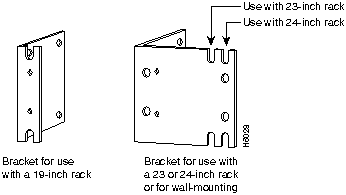
The router is shipped with one set of brackets. Brackets for 19-inch racks are shipped unless the 23- or 24-inch brackets are specified at the time of the order. The brackets are shown in Figure 3-1.
Figure 3-1 : Identifying the Brackets
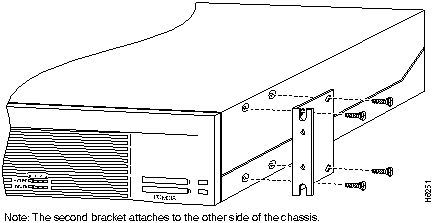
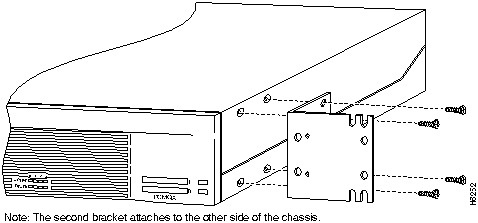
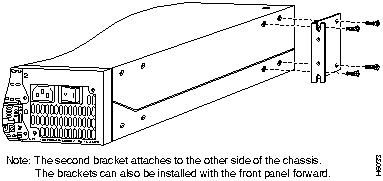
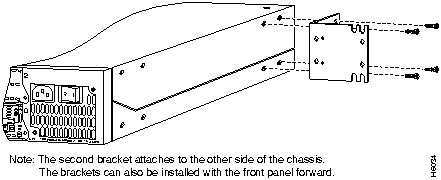
To install the chassis in a rack with the front panel forward, attach the brackets on each side of the chassis as shown in Figure 3-2 or Figure 3-3.
Figure 3-2 : 19-Inch Bracket Installation---Front Panel Forward
Figure 3-3 : 23- or 24-Inch Bracket Installation---Front Panel Forward
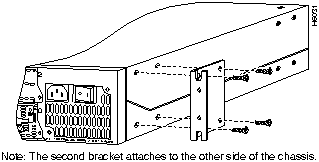
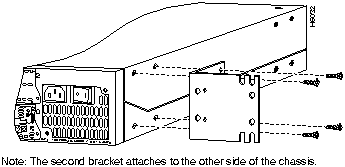
To install the chassis in a rack with the rear panel forward, attach the brackets on each side of the chassis as shown in Figure 3-4 or Figure 3-5.
Figure 3-4 : 19-Inch Bracket Installation---Rear Panel Forward
Figure 3-5 : 23- or 24-Inch Bracket Installation---Rear Panel Forward
To install the chassis in a center-mount telco rack, attach the brackets on each side of the chassis as shown in Figure 3-6 or Figure 3-7.
Figure 3-6 : Telco 19-Inch Bracket Installation---Rear Panel Forward
Figure 3-7 : Telco 23- or 24-Inch Bracket Installation---Rear Panel Forward
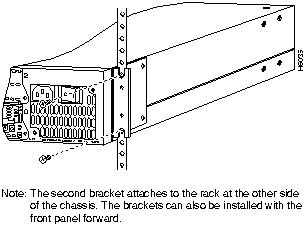
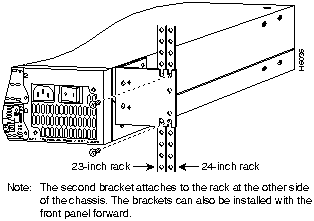
After the brackets are fastened to the chassis, you can rack-mount the chassis. Using your own screws, attach the chassis to the rack as shown in Figure 3-8 or Figure 3-9.
Figure 3-8 : Attaching the Chassis to the 19-Inch Rack---Rear Panel Forward
Figure 3-9 : Attaching the Chassis to the 23- or 24-Inch Rack---Rear Panel Forward
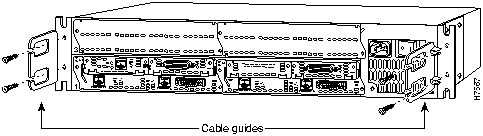
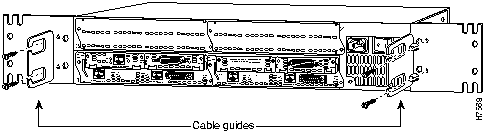
Attach the cable guides to the rack-mounting brackets on each side of the chassis as shown in Figure 3-10 or Figure 3-11.
Figure 3-10 : Attaching Cable Guides to 19-Inch Rack-Mounting Brackets
Figure 3-11 : Attaching Cable Guides to 23- or 24-Inch Rack-Mounting Brackets
After the router has been installed, proceed to the next applicable section in this chapter: "Installing a WAN Interface Card in a Module Slot," "Installing Modules in a Chassis Slot," or "Network Connections."
This section explains how to wall-mount the router. If you are planning to wall-mount your router, do so before making network and power connections or installing network modules or WAN interface cards.
You will need the following tools and equipment to wall-mount the chassis:
These tools and equipment are not provided.
Attaching Wall-Mounting Brackets the Chassis
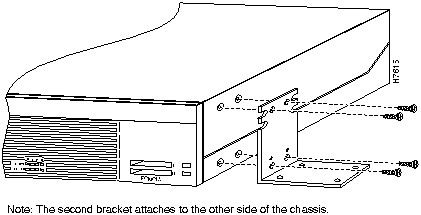
To install the chassis on a wall, attach the 23- or 24-inch rack brackets on each side of the chassis, as shown in Figure 3-12.
Figure 3-12 : Wall-Mount Bracket Installation
Installing the Chassis on a Wall
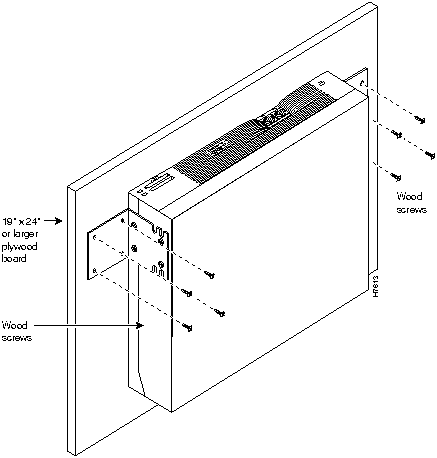
When the brackets have been attached to the chassis, you can wall-mount it. Mount the chassis to the wall with the front panel facing upward, as shown in Figure 3-13.
To wall-mount the chassis, follow this procedure:
After the router has been installed, proceed to the next applicable section in this chapter: "Installing a WAN Interface Card in a Module Slot," "Installing Modules in a Chassis Slot," or "Network Connections."
Figure 3-13 : Installing the Chassis on a Wall
Installing a WAN Interface Card in a Module Slot
The following instructions apply only to installing a WAN interface card in a module slot. To install a module in a chassis slot, see the section "Installing Modules in a Chassis Slot" later in this chapter.
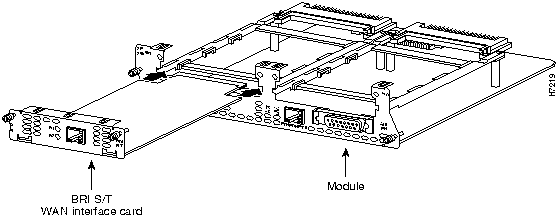
A WAN interface card can be installed in a module that is already installed in a router. Before inserting a WAN interface card into a base module that is already installed in the router chassis, you must turn OFF electrical power.
You need either a Number 1 Phillips screwdriver or a flat-blade screwdriver. To install a WAN interface card, follow this procedure:
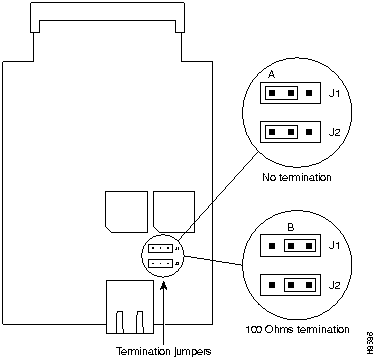
Figure 3-14 : Termination Jumpers on the BRI S/T WAN Interface Card
Figure 3-15 : Installing a WAN Interface Card in a Module
WAN Interface Card Filler Panels
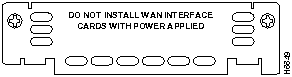
If the base module is configured with only one WAN interface card, secure a slot filler panel into the open base module slot to ensure proper airflow. See Figure 3-16.
Figure 3-16 : WAN Interface Card Slot Filler Panel
After installing any WAN interface cards you may have, proceed to the next section "Installing Modules in a Chassis Slot" to install the modules into the router.
Installing Modules in a Chassis Slot
The following instructions apply only to installing modules in a chassis slot. To install a WAN interface card in a module that has WAN card slots, see the previous section "Installing a WAN Interface Card in a Module Slot" or see the configuration note that shipped with the WAN interface card.
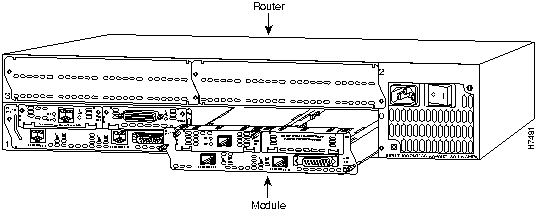
You can install modules in the chassis either before or after mounting the router. If possible, install the modules with the router in the position that provides the best access to the rear panel. You can install any module into any available slot in the chassis.
You need either a Number 1 Phillips screwdriver or a flat-blade screwdriver. To install a module, follow this procedure:
Figure 3-17 : Installing a Module in a Router
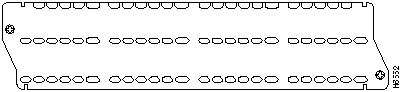
If the router is configured with fewer than four modules, slot filler panels must fill the open slots to ensure proper airflow. (See Figure 3-18.)
Figure 3-18 : Slot Filler Panel
After installing modules into the router, proceed to the next section, "Network Connections."
This section explains how to connect the router to your network. The Ethernet and Token Ring interfaces are used to connect the router to a LAN. The synchronous serial and ISDN BRI interfaces are used to connect the router to a WAN.
The cables required to connect the router to a network are not provided with the router. However, cables and transceivers can be ordered from us. For ordering information, contact customer service. For cable pinouts, refer to the appendix "Cable Specifications."
Connecting to an Ethernet Network
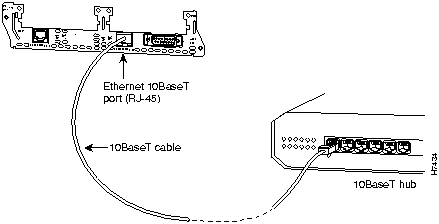
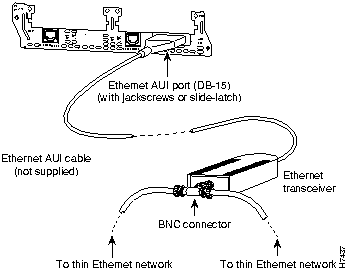
Use an Ethernet AUI cable to connect the Ethernet AUI port (DB-15). Or use an Ethernet 10BaseT cable to connect to the Ethernet 10BaseT port (RJ-45). (See Figure 3-19 and Figure 3-20.) Only one Ethernet port can be used at a time. The module will automatically detect which port is in use.
Figure 3-19 : Connecting an Ethernet 10BaseT Port to a 10BaseT Hub
Figure 3-20 : Connecting an Ethernet AUI Port to an Ethernet Transceiver
Connecting to a Token Ring Network
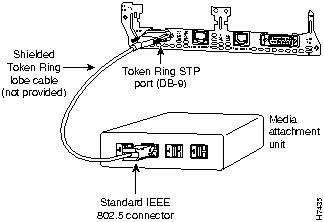
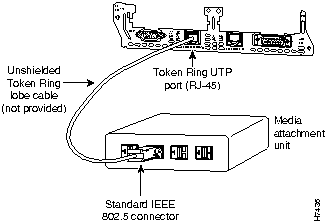
Use a shielded Token Ring lobe cable to connect the Token Ring STP port (DB-9) to a MAU. Or use an unshielded Token Ring lobe cable to connect the Token Ring UTP port (RJ-45) to an MAU. (See Figure 3-21 and Figure 3-22.) Only one of the Token Ring ports can be used at a time. The module will automatically detect which port is in use.
Figure 3-21 : Connecting a Token Ring STP Port (DB-9) to an MAU
Figure 3-22 : Connecting a Token Ring UTP Port (RJ-45) to an MAU
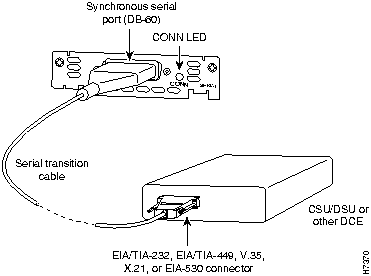
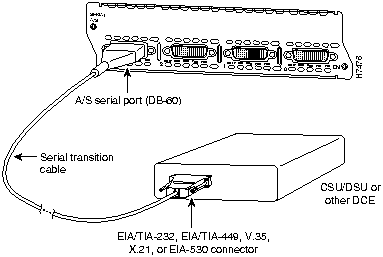
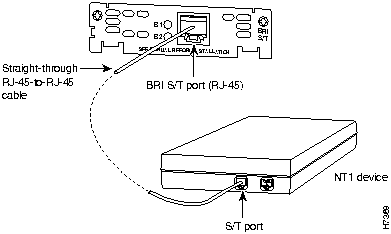
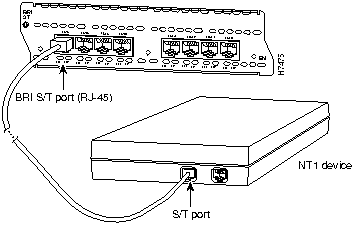
This section describes how to connect the router to the following WAN interfaces:
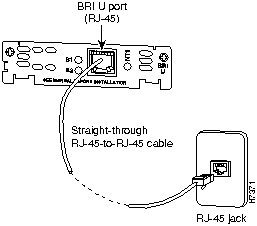
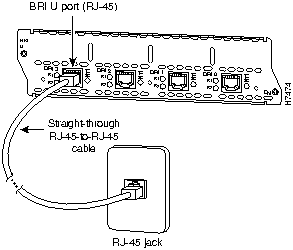
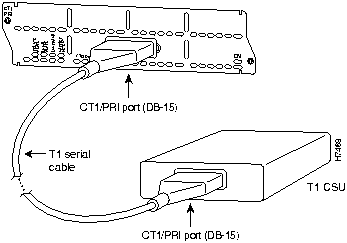
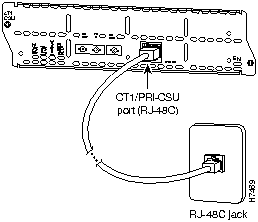
Take the following steps to connect the router to a WAN:
Figure 3-23 : Connecting a Serial WAN Interface Card to a CSU/DSU
Figure 3-24 : Connecting an A/S Serial Module to a CSU/DSU
Figure 3-25 : Connecting a BRI S/T WAN Interface Card to an NT1
Figure 3-26 : Connecting a BRI S/T Module to an NT1
Figure 3-27 : Connecting a BRI U WAN Interface Card to an RJ-45 Jack
Figure 3-28 : Connecting a BRI U Module to an RJ-45 Jack
Figure 3-29 : Connecting a CT1/PRI Module to a T1 CSU
Figure 3-30 : Connecting a CT1/PRI-CSU Module to an RJ-48C Jack
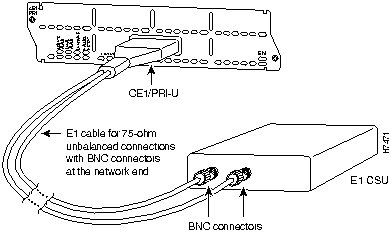
Figure 3-31 : Connecting a CE1/PRI-U Module to an E1 CSU (DB-15-to-BNC Connectors)
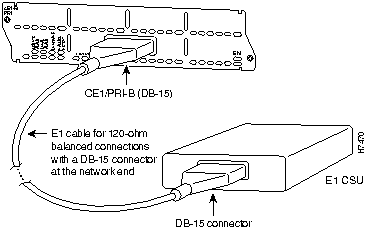
Figure 3-32 : Connecting a 120-Ohm CE1/PRI-B Module to an E1 CSU (DB-15-to-DB-15 Connectors)
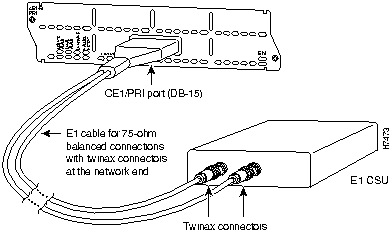
Figure 3-33 : Connecting a 120-Ohm CE1/PRI-B Module to an E1 CSU (DB-15-to-Twinax Connectors)
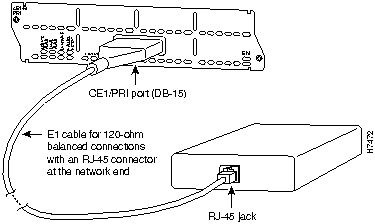
Figure 3-34 : Connecting a 120-Ohm CE1/PRI-B Module to an E1 CSU (DB-15-to-RJ-45 Connectors)
After you connect the router to your network, proceed to the next section "Connecting the Console Terminal and Modem."
Connecting the Console Terminal and Modem
This section describes how to connect a console terminal and a modem to the router. You can connect only a terminal to the console port. Use the auxiliary port with a terminal or a modem for remote access to the router.
Take the following steps to connect a terminal or a PC running terminal emulation software to the console port on the router:
Figure 3-35 : Connecting the Console
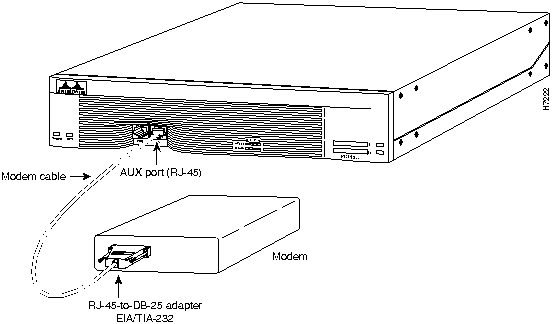
Take the following steps to connect a modem to the auxiliary port on the router:
Figure 3-36 : Connecting a Modem to the Auxiliary Port
This section explains how to connect AC or DC power to a router, and how to power on both AC and DC routers. If you have a DC-powered router, go to the next section, "Connecting Routers with a DC-Input Power Supply." If you have an AC-powered router, go to the section "Powering On the Router" later in this chapter.
Connecting Routers with a DC-Input Power Supply
If you ordered the router with a DC-input power supply, follow the directions in this section for proper wiring. A router with a DC-input power supply has a terminal block cover in place of a three-pronged connector for an AC power cord.
Wiring the DC-Input Power Supply
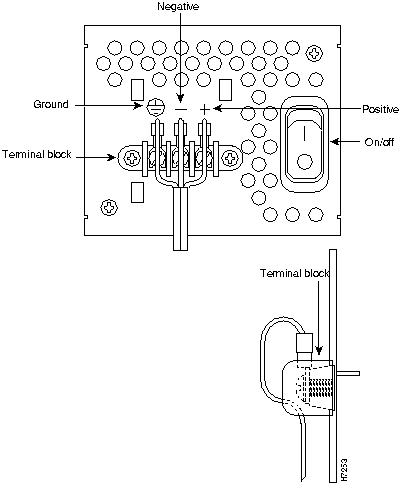
Follow this procedure to wire the terminal block:
Figure 3-37 : DC-Input Power Supply Connections
This section describes how to power on the router.
Follow these steps to power up the router:
If you encounter problems when you power up the router, see the appendix "Troubleshooting."
What to Do After Installing the Hardware
After you have installed the router hardware, continue with the chapter "Configuring the Software."
Copyright 1988-1996 © Cisco Systems Inc.


Mount the router with the front panel facing upward and at eye level, so you can read the LEDs.







Because hardware flow control is not possible on the console port, it is not recommended that modems be connected to the console port. Modems should always be connected to the auxiliary port, except under special circumstances. See the section "Disaster Recovery" in the chapter "ROM Monitor" for more information.